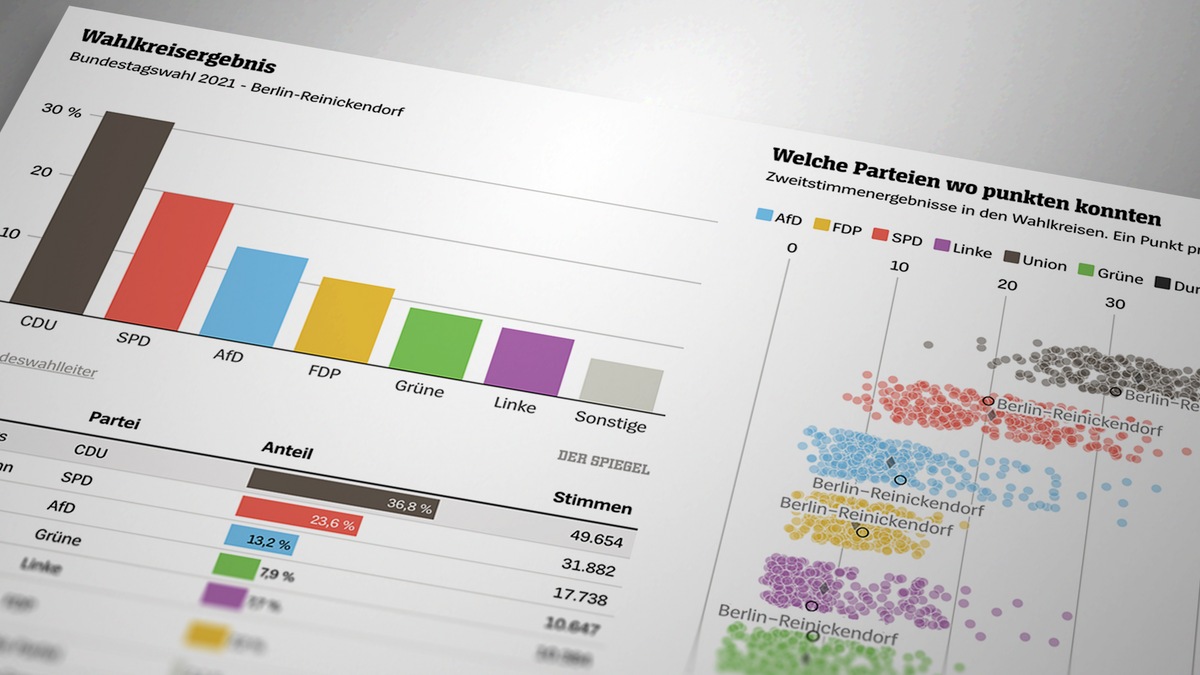
Neu-Ulm Election 2021: Shifting Tides and Enduring Mandates in Bavaria
The 2021 Bundestagswahl marked a pivotal moment in German politics, and the electoral landscape of Neu-Ulm was no exception. While the Christian Social Union (CSU) managed to retain its direct mandate, the detailed
Wahlergebnisse Neu Ulm reveal a significant shift in voter preferences, with the Social Democratic Party (SPD) and the Greens making notable gains. This article delves into the nuances of the 2021 federal election results in Neu-Ulm, exploring the changes, their implications, and the underlying dynamics that shaped the outcome.
The federal election on September 26, 2021, saw citizens across Germany cast their votes for a new Bundestag. In the district of Neu-Ulm, part of the larger Wahlkreis 255 which also includes parts of Günzburg and Unterallgäu, the results painted a picture of evolving political allegiances. Understanding these local figures provides crucial insight into broader regional and national trends, offering a granular view of how Germany's political map is being redrawn.
Decoding the Zweitstimmen: A New Political Compass for Neu-Ulm
The Zweitstimme (second vote) is arguably the more telling indicator of party strength in Germany's electoral system, determining the proportional representation of parties in the Bundestag. In Neu-Ulm, the 2021
Wahlergebnisse Neu Ulm for the Zweitstimmen demonstrated a clear recalibration of voter support.
The CSU, historically a dominant force in Bavaria, secured 31.4 percent of the Zweitstimmen in Neu-Ulm. While this was still the highest share for any single party, it represented a substantial decline of 8.5 percentage points compared to the previous Bundestag election. This significant loss underscores a broader trend seen across Bavaria, where the CSU faced challenges in maintaining its traditional voter base amidst changing national priorities.
Conversely, several parties saw their fortunes improve. The SPD experienced a notable upswing, gaining 3.3 percentage points to reach 17 percent. This reflects the national resurgence of the SPD, which ultimately emerged as the largest party nationwide. The Greens also benefited from increasing environmental awareness and progressive policies, adding 2.9 percentage points to their tally. The Free Voters, a regional party with growing influence, recorded the largest proportional gain, increasing their share by an impressive 4.5 percentage points. Even the Free Democratic Party (FDP) saw a modest gain of 1.4 percentage points.
On the losing side, besides the CSU, the Alternative for Germany (AfD) also saw a decrease in support, losing 3.2 percentage points, and the Left Party experienced a decline of 2.8 percentage points. These shifts indicate a move away from the political extremes in Neu-Ulm towards more centrist and environmentally-focused parties, mirroring some of the broader electoral dynamics observed across Germany in 2021. The collective gains of SPD, Greens, and FDP suggest a diversification of the political spectrum in the region, challenging the long-standing dominance of the conservative bloc.
Direct Mandate Secured: Alexander Engelhard's Continued Representation
Despite the shifts in party preferences, the direct mandate in Wahlkreis 255 (Neu-Ulm, Günzburg, Unterallgäu) remained firmly in CSU hands. Alexander Engelhard, the candidate for the CSU, secured the direct mandate with a clear majority of Erststimmen (first votes). Engelhard garnered 37.2 percent of the Erststimmen, a robust performance that highlights the enduring personal connection and trust voters in the district place in their local representative.
His closest competitor, Karl-Heinz Brunner of the SPD, followed with 16 percent of the Erststimmen. While Brunner's showing indicates a solid base of support for the SPD, it was not enough to challenge the CSU's strong grip on the direct mandate. The direct mandate system in Germany ensures that a specific representative from each constituency is sent directly to Berlin, providing a crucial link between the federal parliament and local interests. This outcome underscores that while party loyalties may be evolving, the appeal of individual candidates can still significantly influence the local results. For more detailed insights into the direct mandate winner and other key figures from the 2021 election in Neu-Ulm, you can refer to our dedicated article:
Bundestagswahl 2021 Neu-Ulm: Engelhard Wins Direct Mandate.
Winning a direct mandate is a significant achievement, guaranteeing a seat in the Bundestag regardless of a party's overall national performance. For the CSU, securing this mandate in Neu-Ulm despite a decline in their Zweitstimmen percentage demonstrates their continued strength at the local level and the effectiveness of their ground campaign in the region.
High Engagement: Voter Turnout and Valid Votes in Neu-Ulm
One of the most encouraging aspects of the 2021 Bundestagswahl in Neu-Ulm was the remarkably high voter turnout. In a healthy democracy, strong participation is a sign of an engaged and active citizenry, and Neu-Ulm delivered on this front.
Out of 124,109 eligible voters in the Landkreis Neu-Ulm, a striking 97,009 individuals cast their ballots, translating to a voter turnout of 78.2 percent. This figure is slightly higher than the national average of 76.6 percent and comparable to Bavaria's overall turnout of 79.8 percent. It also represents a modest increase from the 2017 Bundestagswahl, where Neu-Ulm's turnout was around 76.2 percent, indicating growing engagement over time.
The high turnout in Neu-Ulm suggests that residents keenly followed the political discourse and understood the importance of their civic duty. Furthermore, the handling of votes demonstrated exceptional precision:
- Ungültige Stimmen (Invalid Votes): Only 754 Erststimmen (0.8 percent) and 589 Zweitstimmen (0.6 percent) were deemed invalid.
- Gültige Stimmen (Valid Votes): This meant 96,255 Erststimmen (99.2 percent) and 96,420 Zweitstimmen (99.4 percent) were valid.
These extremely low invalid vote percentages highlight a well-informed electorate and efficient electoral processes, ensuring that the will of the voters was accurately reflected in the final
Wahlergebnisse Neu Ulm. Such a robust turnout and minimal errors are testament to the health and vitality of the democratic process in the region. For comprehensive statistics on voter participation and detailed results across Neu-Ulm, our article
Neu-Ulm Bundestagswahl 2021: Full Results & Voter Turnout offers a deeper dive.
Regional Impact on National Representation: Bavaria's Voice in Berlin
The election results from constituencies like Neu-Ulm contribute to the broader picture of state-level representation in the Bundestag. Bavaria, as Germany's largest state by area and second-largest by population, plays a crucial role in national politics. Following the 2021 election, a significant contingent of representatives from Bavaria headed to Berlin.
According to the Bavarian State Electoral Commissioner, 116 of the total 735 mandates in the new national parliament were allocated to Bavarian candidates. This substantial number ensures that Bavaria's interests and perspectives are strongly represented at the federal level. The distribution of these Bavarian mandates reflects the shifts seen in the
Wahlergebnisse Neu Ulm and across the state:
- CSU: 45 mandates
- SPD: 23 mandates
- Greens: 18 mandates (including their first-ever direct mandate from Bavaria, a historic achievement)
- FDP: 14 mandates
- AfD: 12 mandates
- Left Party: 4 mandates
The fact that the Greens secured a direct mandate for the first time in Bavaria underscores a changing political landscape, even if it wasn't specifically in Neu-Ulm. It signifies a growing environmental consciousness and a more diverse political representation emerging within this traditionally conservative state. For the residents of Neu-Ulm, these state-wide results mean that their regional concerns will be channeled through a more diverse group of Bavarian representatives, potentially leading to varied legislative priorities and increased competition for federal resources and attention.
Conclusion: A Dynamic Political Future for Neu-Ulm
The 2021 Bundestagswahl in Neu-Ulm served as a microcosm of Germany's evolving political landscape. While the CSU retained its direct mandate through Alexander Engelhard, the significant dip in its Zweitstimmen and the rise of the SPD and Greens signal a clear shift in voter sentiment. This reorientation suggests a move towards a more pluralistic political environment, where traditional allegiances are being re-evaluated in light of new national and global challenges. The impressive voter turnout in Neu-Ulm further solidifies the community's active engagement in shaping its future. As Germany moves forward, the detailed
Wahlergebnisse Neu Ulm will undoubtedly serve as a critical reference point for understanding regional political dynamics and forecasting future electoral trends. The interplay of strong local representation and evolving party preferences will continue to define Neu-Ulm's contribution to national politics in the years to come.